I had intended for this article to come out close to Valentine’s Day this year. After all, it was originally intended as a rebuttal against Evie Magazine’s article ‘The Case for Centering Your Life Around Romantic Love‘
I don’t mind talking about the subject of Romantic love months after Valentine’s Day because frankly, the subject need not be limited to that day. We have critiqued the Romantic model for great reason and the relevance of the subject is year-round. I have no qualms about completing these thoughts at this time of year.
While this is not a step-by-step takedown of the article itself, some context is clearly required. If one can see the tag line for the article by Jaimee Marshall, it reads: “That our greatest novels, most enduring works of art, most popular songs, and most affecting films overwhelmingly center around themes of romantic love is telling.”
Amounting to nothing much more than “It’s in our media and recent history, therefore it is right”, it sums up the gist of the article. Okay, if you want more, here are some gimmies.
“We all knew that those who vocally ‘hated’ Valentine’s Day really just meant they hated spending it alone and resented everyone who got to partake in the festivities with a chivalrous, thoughtful lover.”
A hasty summarization alleging that there are no legitimate critiques on the idea of the holiday (Yes, I know it’s not actually a holiday but judging by the pious and worshipful attitudes of its celebrators, is it not practically a “holiday”?) And, the allegation that men are lonely and bitter because they ain’t got no woman. Seems like projection, since these women appear to be constantly bitter at men deciding not to let women be the center of their lives.
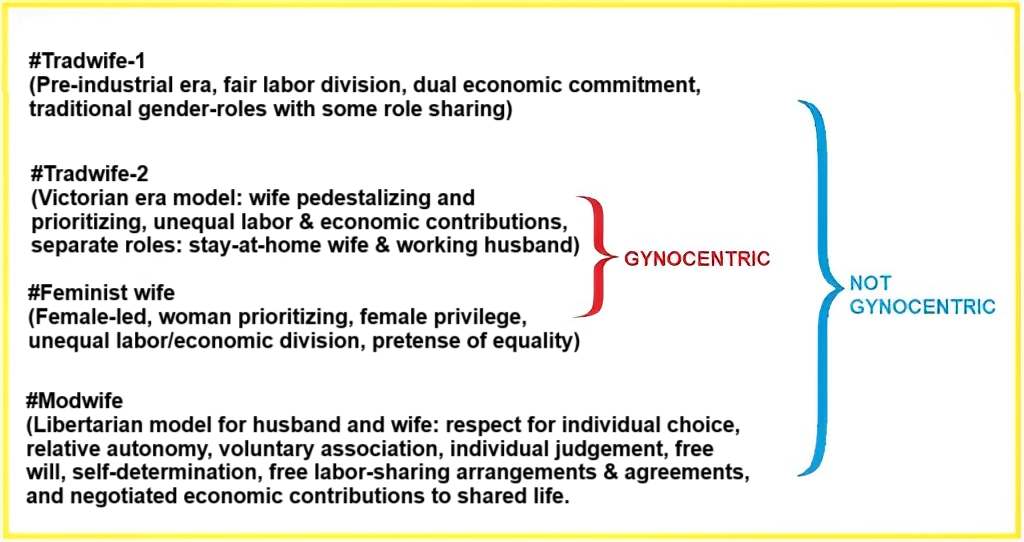
And that’s what the title of the article, ‘The Case for Centering Your Life Around Romantic Love’, means in the end, doesn’t it? It reads, ‘The Case for Centering Your Life Around Women’.
The article tries to sound nuanced, as follows:
“Since children are dependent on their parents for survival, some form of sustained pair bonding is clearly essential, though (Richard S.) Schwartz says there’s no reason to think it must be romantic. You could imagine, and indeed there is precedent, for a sort of kin-based, communal structure to raising children that gets the job done without monogamous romantic love. However, romantic love’s persistence across cultures suggests it’s a core feature of human psychology, not an incidental cultural invention.”
I promise this will be the last of the Evie article, but referring to “renowned” biological anthropologist Helen Fisher:
“…one of the world’s leading experts on the neuroscience of romantic love, has described it as humanity’s most powerful drive. ‘People pine for love, they live for love, they kill for love, and they die for love,’ she has said, framing romantic love as a deeply embedded neural system that cannot simply be opted out of. According to Fisher, humans are hardwired for pair bonding through their very brain circuitry.”
Appropriate, is it not, that the emotional impulse to die for and kill for and dedicate one’s life to women comes from an “expert on neuroscience”, presenting male disposability as a norm. And yes, for those new to basic humanity for the male of the human species: the glorification and exaltation of male disposal for the sake of females is precisely what is being talked about here. The Romanticist thinks it’s dreamy. Anyone with basic esteem for men would think it is ghastly.
Since when is love in its most meaningful sense a cause or motive for death and abnegation?
But that’s the gist of that article. Blubbering pontifications confusing romanticism with proper pairbonding between the sexes, elevating Romantic love above all human relations (“All other human relationships pale in comparison”) and the constant appeal to hardwiring and biological inevitability.
In my mind, this all amounts to human (male) self-destruction as an argument for human species survival – this is the essence of collectivism, the denial of humanity to one segment of the species to serve a societal idealism.
Alright, enough of the nonsense. Here are the Five Reasons Not to Center Your Life Around Romantic Love.
1. The History of Romantic Love
The original article implies that our novels, artworks, “popular songs” and “most affecting films” are the proof we need that we need to center our lives around romance. To me, this accidentally suggests that all these are vastly new to human history, and nothing evolutionary in the sense that it was a cornerstone to our becoming homo sapiens, standing on our own two feet and achieving the glory of civilization.
While I am not saying that choices made from human infatuation never happened earlier in human history, nobody called it a virtue per se. The codifying of these infatuations into a whole framework of romantic love, or courtly love, appears to be in the order of centuries old.
Romantic love is as such not a biological constant. Instead it was a new, aristocratic cultural edict in which asymmetrical emotionalism was declared as a virtue. Emotion over mind became the standard. The result was the preaching of man’s sacrifice of rational interests, priorities, personal dignity, discernment, and resources.
What’s more, if we are talking history, marriage was primarily done with economic and political endpoints in mind, and yes as well as kinship. Passion was not the key factor. While to the uninitiated these arrangements seem like a game for the very rich, even the much poorer classes married for economic and survival purposes. The poor in particular did not appear to have the luxury of impulsive romantic acts.
The man grovels for the pedestalized female, who is both superior and more fragile than the man at the same time. Such is the legacy of romantic love, continuing to this day in modern formats. But the modern formats are taken today, erroneously, as evidence of the biological evidence of homo romanticus patiens…the suffering romantic man, as the apex of evolution.
(Some runner ups were homo troubadorus, and homo pedestalicus, but I digress)
Being the farthest from the historical authority on the subject myself, I will leave some readily accessible links to Peter Wright’s gynocentrism.com, in particular the ones under ‘Courtly & Romantic Love’:
These will be able to tell you more than I can of the historical details that make clear that Romantic love is far less wholesome than most people delude themselves into thinking. Much of the Romantic ideal is downright misandric, if one can uncover his or her self-imposed blindfolds and take a good look.
2. Romantic Love is for Show and Public Acceptance.
Ever notice how in the process of promoting Romanticism, it always entails an element of loudness and publicity? Romantic love is to be “shouted”, one must want everybody to know it, and it is what the world needs right now to solve all our problems.
In the otherwise genuinely entertaining show Family Matters, Carl Winslow (the husband and father in the show) is too often portrayed as what I can only describe as henpecked, though to be fair this quality did not necessarily dominate the character’s run on the show. In the b-story of the episode “It Didn’t Happen One Night”, Harriette (the wife/mother) is upset with her husband, essentially, because he won’t express how he feels about her in public, and instead prefers to keep things private. This cumulates into what is essentially a concession on Carl’s part as he takes his police megaphone and shouts to the entire neighborhood out his door about how he loves his wife, after which Harriette is happy.
Certainly there are other moments like this in media and no doubt in romantic stories. There are other vestiges of this in our world – the awkward kiss cams in stadiums, carvings in trees with cupid’s arrows, blimps conveying messages that Boy loves Girl (yes, Family Matters did this too), the get-down-on-one-knee and propose in public that I’ve seen too often to my exasperation, and many more.
The marketing used here is “true love against the world”. As if the world will never approve of the love of this fine couple, but they don’t care, they are going to scream it out into the world and it doesn’t matter who knows it!
The problem with that is, that this is false – it’s not about being in defiance of societal expectations. Instead, it is about making sure society approves it.
The Romantic model, certainly as we are seeing it today, is all about advertising one’s love instead of keeping things intimate and private, leaving things within the pairbond and not shoving it into people’s faces. What we have is all about having an audience, and the approval of said audience.
It’s all about making it everybody’s business.
The approval, then, is focused on making sure the female half is “treated right”, when concerning the heterosexual side of things. As a sidenote, romantic framing within the LGBTQ+ contexts are always celebrated and subject to public approval, such to the point that any objection to that is immediately shot down as “bigotry” even if the objection was more akin to “get a room”.
But back on point. This societal scrutiny and approval is what the romantic model thrives on. It has nothing properly to do with indifference or defiance of what others may think.
Let’s talk more on how this is all for the performative benefit for the female. We know that the romantic model enables female narcissism vastly. A key quality about narcissism is the requisite of an audience to adore and uphold the narcissist. This “shout your love” aspect of the social Romantic model is tailor-made for the narcissist.
This is a danger for both healthy pairbonding and to one’s actual character, male or female. The society that abides under the Romantic model is essentially promoting living by consensus.
Under this, men are only “approved humans” if they center their lives around women. The rebuttals for failing to do so are ready-made and women of all stripes are equipped with them: Incel, Misogynist, something referencing penis size, Loser, and whatever else they can scrounge up.
The women in question cannot conceive of a life in which they aren’t showered with social approval, in essence demanding a lifelong princess treatment. Jettisoning self-accountability, she becomes just a set of whims and firing emotions.
And this is supposed to be essential to the human race biologically? This is what we must celebrate?
I’ll close off this second point by mentioning that in a proper pairbond, privacy is non-negotiable to the intimacy. There is nothing wrong with passion (rationally navigated and arrived at), but by its very design it is not something one advertises the particulars of. “None of your business” should be the norm regarding the details of the relationship as far as the passion goes.
The over-advertising and screaming-to-the-world of romance is deluded. If there is a good pair bond, why not keep it personal? Public romance is to involve the world – and so the pair is beholden to that world.
If we as a race evolved to uphold anything, it is our notion of privacy – but that is a subject for another time.
3. Pathologies Particular to the Romantic Model
The big error that Romanticists repeat that make them sound somewhat credible is the conflation of Romantic love with pairbonding itself.
Pairbonding, by the term alone, should imply mutual respect, values-based meaningful love, and above all, a close understanding and a type of friendship. If we look closely at romance, any pretense that it is a valid form of pairbonding has a way of unraveling.
I have already talked about the narcissism it induces particularly in women. The attention-seeking works in two ways: making sure the woman looks well-taken care of and tended to (“treat her right”, etc), and making sure the man us under her thumb and heel as needed, at her beck and call.
The latter sometimes is blatant; he is observably submissive when one takes a quick glance at the relationship. There are other circumstances in which this is not obvious, however: the pretense of leadership. Women, often the tradgyn types, love to talk about how a man leads.
Translating what such a woman says, this reads: “He pulls the carriage I am resting on while I crack the whip.”
Such “leadership” is performative, and she is nothing but condescending towards the very man she is allegedly pairbonded with. But this is neither friendship, understanding, nor any meaningful notion of love.
It resembles a relational pathology.
By design, the male fills the sacrificial role in anything deriving from the Romantic model. In a proper pairbond, a woman should be aghast at the notion that her male partner, her close friend, is to be sacrificed at all; she should be equally aghast that she is the beneficiary and endpoint.
This horror is a rational response, assuming we can expect women to feel this at all at this point. What do we have instead in this world? Adoration, gratitude, and joy – because a man is degraded. She is the visible cause of this, and her response is the opposite of horror. This is the pathology of society, the legacy of Romantic love. And it appears to be essentially exclusive to this model.
I’d be remiss if I failed to mention the accidents of youth that are the result of marketing Romantic love by and large. Emotional damage, radical adjustment to expectations physically and mentally, humiliation, all the way up to teen pregnancy – those are the fruits of Romantic love and the embracing of infatuation as standard instead of a challenge to overcome.
And what about the darker things that have been done? Murders due to jealousy, the murder of children in the light of affairs, suicidal acts of the moment, hybristophilic situations with women romanticizing dangerous criminals, and the most common popular result of romance: the thriving divorce industry and women looting their ex-husbands property without a care in the world.
We can safely say that it is rational to avoid Romantic love. When women, even those who allegedly “defend” men like the busybodies in Evie, instead insist that we need more Romantic love, and assert that only nasty, “lonely and bitter” men are against this, then this only indicates how deep the pathology runs in society. If the antifeminists themselves still fight for gynocentric ideology, it’s more uphill a battle than one wishes it is.
4. Companionate Love is Superior to Romantic Love
I for one wish we had a snappier label for this variant of love that we advocate. Companionate love, for the moment, seems to suffice.
It incorporates Storge in the sense that it is in fact a love of the family in a real sense. A pairbond, assuming it is built to last, is literally chosen family. The reason I don’t care to *only* call it Storge and leave it that is due to the privacy/intimate factor – it specializes it just enough to earn what is possibly a distinct categorization, or a subcategory.
Now let’s talk about Eros, or Erotic love. While Eros is often conflated with Romantic love, this is a mistake, and the reason goes beyond a simple mis-categorization.
Eros, properly, is unabashed. Romantic love, on the other hand, serves to both curtail and subordinate Eros. Romantic love serves to starve and control sex in a way that cartelizes it, to manipulate a man by withholding sex and general affection. So I think it is wrong to directly equate it with Eros.
In case I haven’t made it clearer before, those that hold the reins of Romantic love don’t approve of men’s Eros in any meaningful way. It goes without much explanation that male sexuality is demonized, with the express directive that it is only proper when it serves women. If anything, Romantic love whitewashes Eros, demonizes it and then “forgives” it in men if certain shit-tests are passed.
As the erotic factor is important to a pairbond (albeit in varying degrees; men are different in the volume of their sexuality here), is Erotic love the proper descriptor of what we are looking for?
Well, while it is part of it, a pairbond isn’t necessary per se for erotic love to have some presence, so again it isn’t a complete picture. Like Storge, it isn’t an estimate of it, but it is adjacent. What we are looking for incorporates both to be sure, but it needs a proper category that isn’t Romantic love.
Whatever we call this (and again, Companionate love seems to do for the time being), it is the more rational, moral choice over Romantic love.
So, does this mean we must center our lives around Companionate love instead? The answer…is no.
5. You Shouldn’t Be Centering Your Life Around “Love” Anyway.
Even if Romantic love is all it’s cracked up to be (and I hope I’ve indicated successfully that it isn’t), one must not center one’s life around it. So it should follow that whatever remains that *is* all it’s cracked up to be – that is, what we call Companionate love or any proper form of intimate love – should likewise not be the center of one’s life.
Romantic love is practically by definition centering one’s life around a woman on the man’s part, and on the woman’s part the indulging and moralizing of men’s centering of her in his life. We disavow this paradigm by rejecting Romanticism itself.
So, as a proper form of Companionate love doesn’t involve this centering, it follows we shouldn’t force it to be the center as it is not natural to do so.
A human life essentially is about values and the pursuit of happiness. Things like love are a detail (albeit non-trivial), not an end goal. If anything, the pairbond should be among the number of things that reflect how you live your life with the values you aim for. They are not the aim itself.
Your ikigai, that sense of life purpose and worth, is something particular to yourself that cannot be simplified by who you have a relationship with. Everything and everybody you choose to surround yourself with should be an indicating detail and reflection of the choices you made as per your ikigai. They are not the ikigai itself.
In plainer language, your pairbond should reflect your values, yes. But it is not in itself the center.
While this is the most important reason in this article, there isn’t much to be more longwinded about, and I think this is very straightforward. Love is not the most important thing on this planet nor for our existence, and there are other things more important than the even best iterations of partner love.
Respect, especially for oneself, comes to mind. From that flows mutual respect, the understanding of values and boundaries, and one another. Love being the greatest value in the world tends to comfort people, but it’s time to challenge that.
Some Closing Thoughts on Love
Even if we extracted the toxic elements – the sacrificial expectation for men, the pedestalizing, and the exhibitionistic performances – the very notion that one must center their life around love is a funny thing.
I have come to properly understand love as an action that is self-initiated. In some of its purest forms, it manifests itself as attention that bring out the life in something, be it work on one’s car, a dedicated train set, a well-designed composition or architecture, a meal cooked in just the right way, and many other examples.
Love, then, appears to be a cultivation and a process. It’s not an end goal to center one’s life around, but just something we wield mindfully. It cannot be faked – “duty” or “obligation” to love then becomes inexact, as again this is self-initiated.
The same should stand when love is applied to human relations. Love brings out the life in people where needed. Relationships, and loves, are built over time.
But reliance on another’s love is only an indicator that one has failed to love oneself in a meaningful way as I have described thus far: taking charge of one’s own life and freeing it from being beholden to another’s approval.
The centering of love, and the “pursuit” of it, then makes for two pratfalls: one – the insistence to perform love to the point of sacrificial behavior, and two – the complete, narcissistic reliance on love by another such that they will fall apart when they have to stand alone.
Standing alone is the key to humanity and despite the familiar prattling of how man is a social animal, humanity’s true evolutionary distinction is the ability to stand alone…but that is an article for another time.