Cultura Ginocéntrica
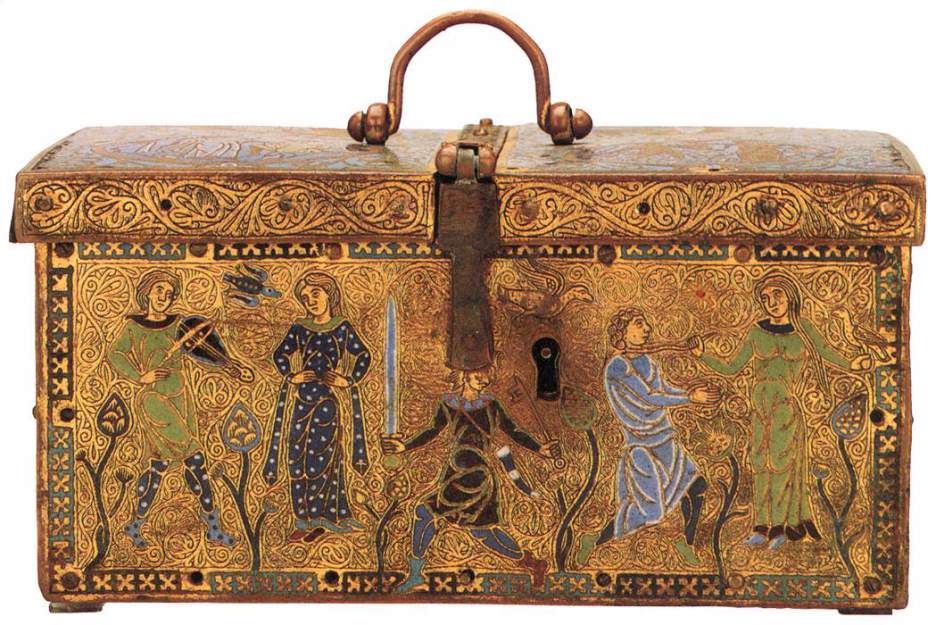
El amor y la guerra siempre han sido opuestos, tal como lo expresa aquella conocida frase “haz el amor y no la guerra”, o la retórica de los bandos a favor y en contra de la guerra. Que ambos sean mutualmente excluyentes es lo suficientemente obvio. Sin embargo, en la Europa del siglo XII sucedió algo peculiar que marcó el comienzo de una unión entre estos dos principios contrapuestos. En ese entonces, el código militar de la caballería se unió con los caprichos del amor cortés para producir una creatura bastarda que aquí llamaremos amor caballeresco (hoy simplemente lo llamamos caballerosidad). Anterior a esto, la caballerosidad siempre se había referido al código militar de comportamiento –uno que cambiaba de país a país- pero que no tenía nada que ver con el amor romántico.
¿Cuál fue el método que la sociedad del siglo XII utilizó para lograr esto? En una palabra, avergonzando.
La aristocracia medieval empezó a aumentar la práctica de avergonzar al escoger lo peores comportamientos de los hombres más revoltosos y extrapolar dichos comportamientos a todo el género masculino. ¿Suena familiar? Los caballeros eran particularmente señalados –de manera muy similar a los actuales héroes del deporte que han cometido algún tipo de paso en falso– para ser usados como ejemplo del mal comportamiento masculino que requiere el remedio de una reforma cultural de gran envergadura.
Durante esa época de hombres (supuestamente) revoltosos, se decía que escuderos maleducados entraban a las cantinas montando sus sarnosos caballos, y groseros hombres jóvenes osaban desviar los ojos del salterio en plena misa. Entre los caballeros, y en el ambiente de los torneos, se sucedían riñas ocasionales con incidentes horribles –la ruptura de un cráneo, o el que un ojo se saliera de su órbita- mientras las apuestas continuaban y los dados volaban. La atención masculina a la vestimenta y a la moda era supuestamente desastrosa, con hombres que no tenían problema en vestir pieles de ovejas y zorros en lugar de las ropas hechas de materiales valiosos, con colores más acordes a la compañía femenina. Y tal vez lo peor de todo era su falta de refinamiento y modales hacia las mujeres, lo que era considerado ofensivo.
¿Quién podría, y cómo se lograría reformar a este género revoltoso? Una de las primeras soluciones fue planteada por una condesa francesa llamada Marie. De acuerdo a la historiadora Amy Kelly, con sus ideas de reforma masculina,
“Marie organizó a la turba de soldados, guerreros, duelistas, hombres de acción, jinetes, trovadores, nobles y debutantes, jóvenes hacendados, príncipes adolescentes, y princesas niñas en el gran salón de Poitiers. De este pandemonio, la condesa confeccionó una sociedad decorosa y elegante, cuya fama se extendió por todo el mundo. He ahí la misión de una mujer para alejar a los hombres de las emociones de la caza y los torneos, de los dados y los juegos, y atraerlos hacia la sociedad femenina, una misión para proscribir la tosquedad e imponer el tributo de adulación a la majestad femenina.”(1)
La Condesa Marie era una más entre una larga línea de reformadores que ayudaron a dar inicio a un ginocentrismo cuyo propósito era convencer a los hombres de los defectos compartidos por todo el género –esencialmente avergonzarlos- y prescribir como remedio el amor romántico y la adoración concomitante de las mujeres. A través de este programa, el amor romántico fue irremediablemente unido al código militar e introducido como una manera de domar la actitud pendenciera y brutal de los hombres, algo en lo que los tradicionalistas de hoy en día concuerdan en su llamado a que los hombres se adhieran a estos mismos roles masculinos establecidos por primera vez en la Europa medieval. Una de las autoridades actuales en este periodo de la historia describe el entrenamiento de los caballeros en la siguiente observación: “el surgimiento del amor cortés y su intersección con la caballerosidad en Occidente son ambos eventos del siglo XII. La idea según la cual el amor ennoblece y es necesario para la educación de un caballero proviene de las letras de este periodo, pero también de los romances de caballería. En ellos, los verdaderos amantes eran también los mejores caballeros.” (2)
Con el amor romántico firmemente establecido dentro del código de caballería, empezamos a ver el comportamiento romántico de los soldados tan familiar para nosotros hoy: ir a luchar y morir por su Dama, cartas de amor desde el frente de batalla, la foto arrugada de su amor en un bolsillo de su uniforme. En lugar de ser hombre, rey y patria, es el amor por “ella” el que ahora motiva a un hombre al sacrificio militar. Ésta es también la razón por la que tantas películas actuales en las que se retratan zonas de guerra y matanza incluyen a un héroe y a su damisela tomando una pausa para darse un apasionado beso mientras las bombas estallan a su alrededor, como para sugerir que toda esa carnicería es en nombre de ella y del amor romántico. Una vez aceptadas en el canon caballeresco, varias “reglas” de amor fueron impuestas con fuerza militar –por caballeros blancos, como los llamamos- y la cultura resultante ha sido imparable. Tratar de detenerla despierta la ira de todos esos caballeros blancos quienes te enterrarán vivo por romper esta nueva meta militar del amor romántico.
Antes de la Edad Media, el amor romántico era usualmente considerado con sospecha e incluso visto como un signo de inestabilidad mental que requería la eliminación de la fuente del problema, y tal vez una solución médica. En el contexto de los matrimonios arreglados, el amor romántico, si era permitido del todo, se llevaba a cabo de una manera discreta e incluso clandestina, sin el consentimiento explícito de la sociedad educada. Esta era la situación en todo el mundo hasta el advenimiento de la revolución europea.
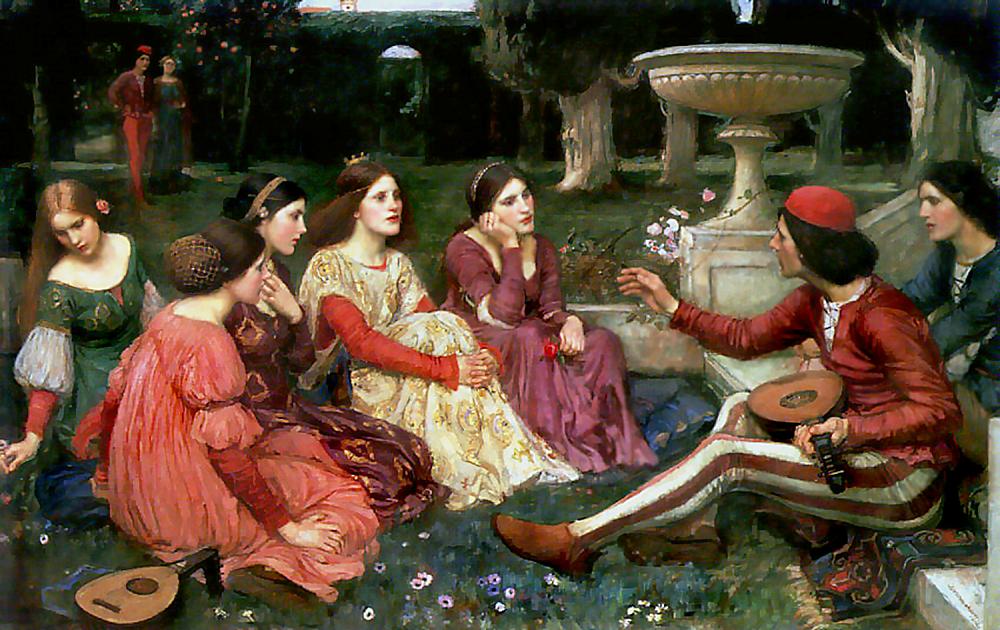
El culto al amor caballeresco se radico primero entre las clases aristocráticas y pronto alcanzó a las clases comunes a través de la literatura y las narraciones; en particular la literatura romance. Habiendo germinado en Alemania y Francia en el siglo XII, el culto se expandió gracias a una industria pujante de producción de libros que llevaría la revolución ginocéntrica a todo el continente europeo.
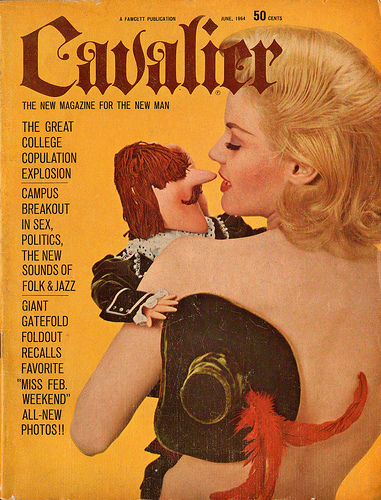
Cuando uno considera los sujetos de estos libros –Gawain y Guinevere, Tristán e Isolda, heroicas hazañas masculinas por las mujeres, escándalos amorosos, cortejo, bodas de clase alta, adulterio, y estatus- se nos vienen a la mente inmediatamente las revistas para mujeres actuales que abundan en los estantes de las librerías y en las salas de espera.
Las revistas para mujeres y la omnipresente novela romántica –y la gula que las mujeres sienten por ellas- se pueden rastrear hasta este periodo en el que el término romance se acuñó. Según Jennifer Wollock, profesora de Literatura en la Universidad de Texas, esta literatura tenía un sustancial público femenino, incluyendo a las madres que les leían a sus hijas. Wollock afirma que la continua popularidad de las historias de amor caballeresco también se confirma por la procedencia de manuscritos romances y los contenidos de las bibliotecas de mujeres de la Edad Media tardía.
Los tres comportamientos del código de amor caballeresco
Manteniéndose en el lado masculino de la ecuación, los principales comportamientos prescritos por el código de amor caballeresco son: el llevar a cabo hazañas románticas, la galantería, y el vasallaje.
Anterior a esta redistribución en relaciones románticas, la galantería solía referirse a cualquier comportamiento valiente, especialmente en batalla. La palabra aún puede significar eso. Sin embargo, bajo las reglas del amor caballeresco se convirtió, según la definición del diccionario de Google, “atención cortés o respeto que el hombre le da a la mujer”. ¿Podrían estas dos definiciones de galantería estar más lejos la una de la otra? Así como los conceptos contrarios de caballerosidad militar y amor caballeresco, estas dos definiciones de galantería estiran el significado para cubrir dos dominios completamente diferentes de comportamiento. Parece entonces que las mujeres de la época hacían uso de los más grandes comportamientos expiatorios de los hombres –caballerosidad y galantería- para satisfacer sus apetitos narcisistas.
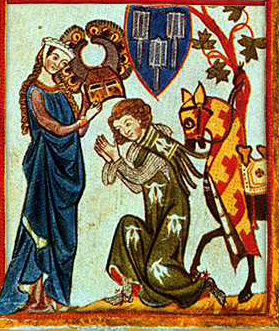
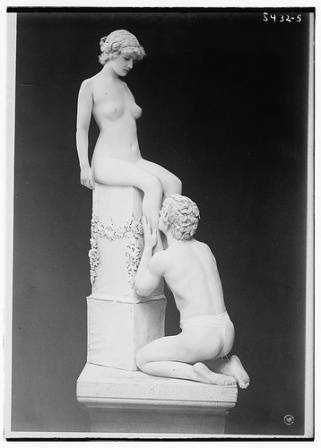
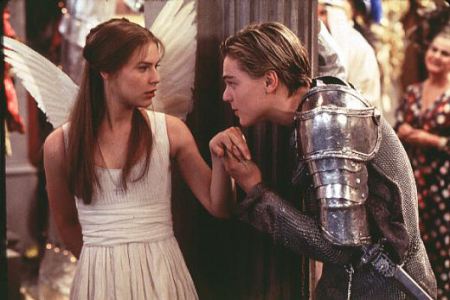
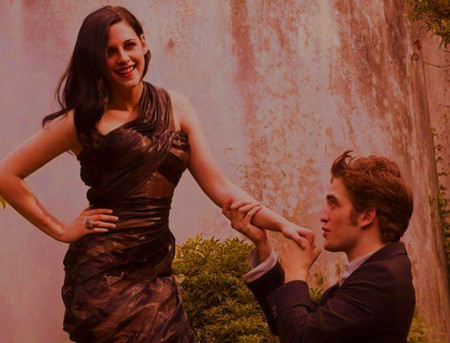
Un vasallo es definido como un siervo, un esclavo, un subordinado o dependiente, o una persona que entra en una obligación mutua hacia un señor o monarca en el contexto del sistema feudal en la Europa medieval. Las obligaciones a menudo incluían apoyo militar y protección mutua a cambio de ciertos privilegios, que usualmente incluían la concesión de tierra mantenida como un feudo. El vasallaje era entonces utilizado como una idea que Maurice Valency llamó “el principio formador de todo el diseño del amor cortés”.(3) Ya fuera un caballero, un trovador, o un plebeyo, la rutina de vasallos de la mujer era la orden del día en ese entonces, exactamente como lo es actualmente (4). Los poetas adoptaron la terminología del feudalismo, declarándose a sí mismos “vasallos” de la dama y se dirigían a ella como midons (mi señor), lo que se tomaba como la adulación estándar de una mujer. Una práctica particularmente impactante que mostraba la adaptación del sistema feudal era aquella en la que el hombre se ponía sobre una de sus rodillas ante la mujer. Al arrodillarse de esta manera, el hombre asume la postura del vasallo. Él le habla, jurándole su fe, prometiéndole, como lo haría un súbdito, no ofrecer sus servicios a nadie más. Incluso va más lejos: como lo haría un siervo, él le otorga a ella todo su ser como regalo.
Citando evidencia del vasallaje, Amy Kelly escribe: “Como estaba simbolizado en los escudos y en otras ilustraciones que colocaban al caballero en la actitud ritual de mención, arrodillándose ante su dama con sus manos dobladas entre las de ella, el homenaje significaba servicio masculino, no dominación ni subordinación de la dama, y significaba también fidelidad, constancia en ese servicio.” (5)
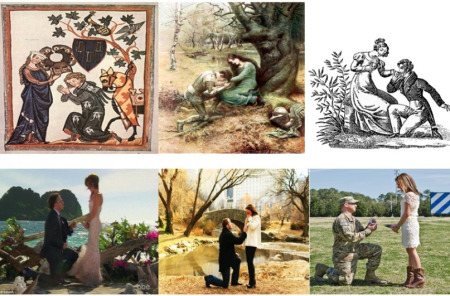
En resumen, era la relación feudal entre vasallo y señor la que le proveía al amante un modelo por su conducta humilde y servil.
_____
Los actores principales – entonces y ahora
Imaginemos a la Europa del siglo XII como una puesta en escena en la que se representan los temas del amor caballeresco, una que se volvería tan popular, que sus actores continuarían sirviendo como modelos a seguir para la población global 800 años después. Los actores principales en esta obra medieval son los siguientes, acompañados (en paréntesis) por los títulos que les damos a esos mismos actores hoy en día, mientras continúan ese antiguo drama:
Damas cortesanas (=Feministas). Las feministas de hoy en día se refieren a las damas cortesanas de la Edad Media como las primeras feministas, o protofeministas, y así como las feministas modernas, aquellas mujeres disfrutaban de un número considerable de privilegios y recursos. Entre los siglos XII y XIV, la evidencia muestra que las mujeres empezaron a causar agitación a causa de una aumentada autoridad sobre la manera “correcta” para llevar a cabo relaciones entre hombres y mujeres, con énfasis particular en lo que ellas creían que eran los roles adecuados para los hombres en una sociedad digna y cívica. No es de sorprender que ésta sea la época en la que mujeres poderosas tenían la facultad de establecer las “cortes de amor” encabezadas por mujeres y que actuaban de una manera similar a las Cortes de Familia actuales, en cuanto a que ambas arbitraban disputas amorosas entre parejas en conflicto.
La literatura clave del periodo, que detallaba la etiqueta adecuada en relaciones de género, era comisionada por mujeres poderosas para ser escrita (“El Arte del Amor Cortés”), y en algunos casos era escrita por las mismas mujeres (los escritos de Christine de Pizan, o los de Marie de France). El discurso emergente actuaba como una droga que prometía la introducción de un poder unilateral de mujeres sobre hombres, y a través de la diseminación de literatura romance que prometía una pronta propagación en todas las clases sociales del continente. Hemos estado viviendo las consecuencias desde entonces de una revolución mucho más significativa para la historia de relaciones entre géneros que la aparición de la píldora anticonceptiva y el divorcio no contencioso combinados- siendo el último un simple epifenómeno generado dentro de una cultura de amor caballeresco mucho más grande.
Los arquetipos introducidos en la sociedad por estas damas de noble cuna son identificables instantáneamente: la damisela en peligro (la mujer como inocente, la mujer como indefensa, la mujer como víctima), la princesa (la mujer como belleza, la mujer como sujeto narcisista que requiere devoción, la mujer como ser merecedor de privilegios especiales), y las damas de alta casta (la mujer moralmente pura, la mujer valiosa, la mujer como superior, la mujer con derecho a reclamar). Estas ilusiones aseguraron que la atención del hombre fuera enfocada a atender las necesidades de la mujer, un programa tan exitoso que las feministas modernas continúan dándole forma al escenario cultural actual con el mismo programa de sus antecesoras protofeministas. Y así como sus antecesoras, las feministas continúan utilizando narrativas que buscan avergonzar a los hombres para facilitar la herencia que las coloca en un pedestal.
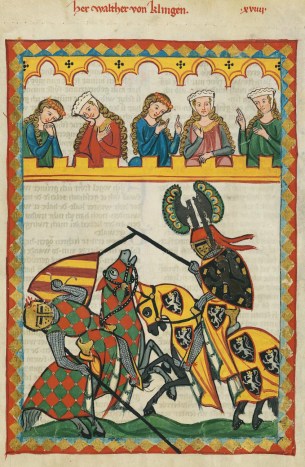 Caballeros Blancos (=caballeros blancos). Conservamos esta metáfora para estos heroicos individuos, hombres galantes de muchas maneras, pero especialmente las incorrectas, como alardear ante mujeres poco merecedoras y deleitarse de manera concomitante en competir y lastimar a otros hombres. Más que cualquier otro actor en esta obra, los caballeros blancos se especializan en el comportamiento galante con el propósito de impresionar a las mujeres, y lograr al final que estas les alimenten el ego.
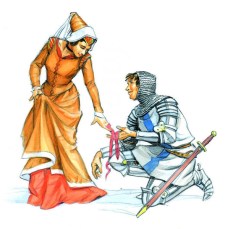
Para estos primeros caballeros blancos, el torneo de justas, precursor de los torneos atléticos actuales, consistía en competencias caballerescas o luchas en la Edad Media. En estas luchas, los caballeros estaban más que dispuestos a lastimar a otros hombres para ganar el elogio de las mujeres espectadoras. Los competidores eran observados luchando por mujeres que tiraban prendas de vestir en la arena donde los atletas las recogían y se las ponían –de ahí que el hombre que vestía el pañuelo de una mujer en particular la representaba a ella en el torneo.
Los hombres estaban básicamente luchando “por ella”, así como lo harían en campos de batalla reales por sus madres y esposas. Al hombre galante que ganaba el torneo se le daba la oportunidad de cortejar a la dama a quien representaba en el ring. Aún conservamos esta tradición ginocéntrica hoy en día: torneos de golf, de fútbol, de artes marciales, y así, están todos diseñados para mostrar proezas masculinas en las que los ganadores logran cortejar a las mejores mujeres.
 Otras actividades de los caballeros blancos incluyen impresionar mujeres con grandes gestos de protección. Por ejemplo, la “Empresa del Escudo Verde con la Dama Blanca” era una orden de caballería fundada por Jean Le Maingre y doce caballeros más en 1399 que se comprometían a proteger mujeres. Inspirados por el ideal del amor cortés, el propósito de la orden era proteger y defender el honor, los bienes, la propiedad, la reputación, la fama y el elogio de todas las damas y damiselas, una tarea que recibió el elogio de Christine de Pizan. Le Maingre, cansado de recibir quejas de damas, doncellas, y viudas quejándose de ser oprimidas por hombres poderosos empeñados en privarlas de tierras y honores, y de no encontrar caballero o escudero dispuesto a defender su justa causa, fundó la orden de doce caballeros jurados a llevar “un escudo de oro esmaltado de verde y con una dama blanca en su interior.”
Los doce caballeros, después de hacer el juramento, redactaron una extensa carta explicando su propósito y la diseminaron ampliamente en Francia y más allá de sus fronteras. La carta decía que cualquier dama, joven o vieja, que fuera víctima de alguna injusticia podría pedir a uno o más caballeros que hicieran valer su honor, y ese caballero respondería prontamente, dejando cualquier otra tarea que estuviera haciendo para luchar en persona con el opresor de la dama en cuestión. Las similitudes de esta Orden con empresas contemporáneas tales como la Campaña de la Cinta Blanca (White Ribbon Campaign) en la que “embajadores” masculinos hacen un juramento a toda la femineidad de nunca consentir, excusar o permanecer callados respecto a la violencia contra la mujer, y de intervenir y actuar contra cualquier hombre acusado de alguna ofensa contra una mujer. Las similitudes entre estas galantes misiones dejan claro que el linaje de caballeros blancos ha progresado fluidamente hacia la era moderna.
Trovadores I (=Pick Up Artists [artistas de la conquista] y los promotores del “Juego” [Conquista]). El trabajo de los trovadores era difundir la palabra respecto a las virtudes del amor caballeresco a través de la música, las canciones, la poesía, y las narraciones. Tanto aristócratas como comunes disfrutaban escuchar cuentos sobre valentía, y las damas se dejaban llevar con los poemas épicos al tiempo que los trovadores practicaban los rituales del amor caballeresco. Así como los Artistas de la Conquista y los Don Juanes hoy en día, quienes hablan y escriben en elogio de la vagina, los trovadores también eran compositores y promotores de las “artes del amor”, que apuntaban a asegurar la plenitud sexual.
Como esos trovadores, Roosh y Roissy [nota del traductor: Conocidos artistas de la conquista en internet], entre otros, continúan la tradición de escribir prosa que ilustra las muchas maneras de adular a las mujeres para poder meterse en sus pantalones. Game [conquista, juego] es una palabra muy apta para esta tradición que ya cumple 800 años, con su prescripción de líneas ensayadas y falta de autenticidad personal. Es un juego ensayado de adoración de las mujeres orientado a una meta muy estrecha. En esencia, esta rutina de Casanova consiste simplemente en fingir el amor caballeresco con el propósito de manipular, generalmente con el objetivo de obtener sexo. Cuando las mujeres modernas llaman a estos hombres “jugadores” están muy cerca de acertar. Aunque Roosh et al declaran externamente rechazar la caballerosidad, aún así aceptan sus principios como si fueran actores consumados.
Trovadores II (=hombres feministas – a veces llamados despectivamente “manginas”). A diferencia de los trovadores mencionados arriba, quienes abogan por un amor orientado a la satisfacción sexual, los Trovadores II abogan por un tipo de amor más idealizado de anhelo que no se consuma en una satisfacción sexual. Básicamente, estos hombres se parecen más a unos Romeos aduladores que a unos excitados Casanovas. El concepto que los guía era llamado “fin’amors”, que significa “amor puro”. Dichos hombres eran particularmente predominantes en el norte de Francia, mientras que en el sur se podía ver que los trovadores (tipo I, ya mencionados más arriba) celebraban un amor adúltero o carnal en el que se buscaban encuentros sexuales.
Otra cosa que distinguía a los trovadores tipo II de los otros era la autenticidad. Estos hombres parecían identificarse totalmente con su papel y no eran simples jugadores. Su deseo de servir a las mujeres como vasallos, o incluso tal vez como esclavos masoquistas, apelaba a su carácter más íntimo. La versión de hoy en día serían los típicos hombres feministas, que trabajan incansablemente para difundir el mensaje de sus superiores feministas, al igual que aquellos trovadores esclavizados que abogaban por las idiosincrasias narcisistas de sus damas. El papel de vasallaje aplica en este caso más que en cualquier otro personaje de la Edad Media –no simplemente como una rutina para poder conseguir sexo, sino como acto verdaderamente devoto.
________
Lo que nos trae a lo que el Movimiento de los Derechos Humanos de los Hombres (MHRM) se refiere como ginocentrismo. De lo anterior es claro que, a menos de que haya evidencia de una cultura (ampliamente) ginocéntrica anterior a la Edad Media, entonces el ginocentrismo tiene precisamente 800 años. Para determinar si esta tesis es válida, primero necesitamos definir qué es exactamente a lo que nos referimos con “ginocentrismo”.
El término “ginocentrismo” ha estado en circulación desde los años de 1800, hasta donde he podido encontrar, y su definición general es “centrarse en las mujeres; preocuparse sólo por las mujeres” (6). Adam Kostakis define el ginocentrismo de manera más específica: “el sacrificio masculino para el beneficio de las mujeres” y como “deferencia de los hombres hacia las mujeres”, y concluye: “El ginocentrismo, ya sea que se llame honor, nobleza, caballerosidad, o feminismo, no ha cambiado en su esencia. Continúa siendo un deber particularmente masculino el ayudar a las mujeres a subirse a los botes salvavidas, mientras los hombres se enfrentan a una muerte segura y helada”. (7)
De estas definiciones podemos ver que ginocentrismo podría referirse a cualquier práctica que se centra en las mujeres en una sociedad que en otras circunstancias es androcéntrica, o incluso a un solo acto ginocéntrico llevado a cabo por un individuo. Teniendo en mente este amplio uso del concepto, la frase “cultura ginocéntrica” parece ser más precisa para los propósitos de este ensayo, y dicha frase la definiré aquí como “cualquier cultura que instituya reglas para las relaciones de género que beneficien a las mujeres a expensas de los hombres en un amplio rango de aspectos”.
En la base de nuestra actual forma de ginocentrismo se encuentra la práctica del sacrificio masculino forzado a beneficio de las mujeres. Si aceptamos esta definición, necesitamos mirar hacia atrás y hacer la pregunta concomitante de si los sacrificios masculinos a lo largo de la historia siempre fueron llevados a cabo por las mujeres o si, en cambio, se hicieron por alguna otra meta primaria. Por ejemplo, cuando los hombres son enviados a morir en grandes números en las guerras, ¿fue acaso por las mujeres, o fue más bien por el Hombre, Rey, y País? Si fue por lo último, entonces no podemos declarar que fue el resultado de una cultura ginocéntrica intencional, o al menos no en la manera en que lo he definido aquí. Si el sacrificio no se hace para el beneficio de las mujeres, aún si ellas son beneficiarias ocasionales de ese sacrificio masculino, entonces no se trata de ginocentrismo.
La prescindibilidad masculina estrictamente “en beneficio de las mujeres” comienza de manera notable después del advenimiento de la revolución de género del siglo XII en Europa –una revolución que nos entregó términos como galantería, caballerosidad, amor caballeresco, cortesía, romance, y otros. De ese periodo en adelante, las prácticas ginocéntricas crecieron exponencialmente, culminando en las demandas del feminismo actual. En resumen, el ginocentrismo era un fenómeno aislado en el mejor de los casos antes de la Edad Media, después de lo cual se volvió algo ubicuo.
Con todo esto en mente, no tiene mucho sentido hablar de una cultura ginocéntrica que empezó junto con la revolución industrial hace sólo 200 años (o hace 100 o incluso 30 años), o de que ésta empezó hace ya dos millones de años, como algunos argumentan. No estamos luchando simplemente con dos millones de años de programación genética; nuestro enemigo, culturalmente construido, es mucho, mucho, más simple de señalar y de, potencialmente, revertir. La evidencia histórica es fuerte. Todo lo que necesitamos hacer es mirar las circunstancias bajo las cuales el ginocentrismo empezó a florecer, e intentar revertir dichas circunstancias. Específicamente, si la cultura ginocéntrica se ocasionó por la práctica de avergonzar, entonces ese es el enemigo al que apuntar con el objeto de revertir toda la empresa. Para mí, ese proceso podría empezar rechazando la falsa pureza moral a la que las mujeres del último milenio han pretendido llegar, y contra la cual han sido comparados los peores ejemplos de los hombres con la pretensión de avergonzar a todo el género.
Referencias
- Amy Kelly, “Eleanor of Acquitaine and Her Courts of Love”. Fuente: Speculum, Vol. 12, No. 1 (Publicado por Medieval Academy of America, 1937)
- Jennifer G. Wollock, “Rethinking Chivalry and Courtly Love”. (Publicado por Praeger, 2011)
- Maurice Valency, “In Praise of Love: An Introduction to the Love Poetry of the Renaissance, (Macmillan, 1961).
- Para un excelente artículo sobre vasallaje hoy en día, ver el escrito por Gordon Wadsworth “The Western Butler and his Manhood”, que indica un línea ininterrumpida entre el vasallaje romántico de la Edad Media y el papel de “mayordomo” que se espera de los hombres actualmente. (Publicado por AVFM, 2013).
- Amy Kelly, “Did Women Have a Renaissance?” en Mujeres, Historia y Teoría. (Publicado por UCP Press, 1984).
- com – Gynocentric
- Adam Kostakis, Gynocentrism Theory – (Publicado en línea, 2011). Aunque Kostakis asume que el ginocentrismo ha estado presente a lo largo de la historia, señala a la Edad Media para comentar: “Hay una inmensa continuidad entre el código de la clase caballeresca que surgió en la Edad Media y el feminismo moderno… Uno podría decir que son la misma entidad, que ahora existe en una forma más madura –ciertamente, no estamos lidiando con dos creaturas diferentes.”
https://gynocentrism.com/2013/07/14/the-birth-of-chivalric-love/
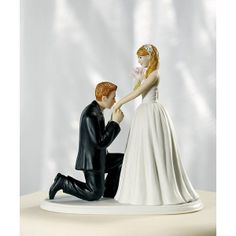
 Se piensa que la práctica de intercambiar anillos de boda se extiende muy atrás en la historia antigua, y se ha encontrado evidencia de ese ritual en el Antiguo Egipto, Roma, y en diferentes culturas religiosas. Sin embargo, nuestra práctica moderna de anillos de bodas tiene un origen y un significado distinto, uno que podría ocasionar un estremecimiento en más de una persona. Como se sugiere en el blog Society of Phineas, el anillo funciona como un contrato feudal entre el hombre y su esposa:
 Como en la descripción ofrecida por Kelly, los hombres continúan poniéndose sobre una rodilla y no tienen problema en demonstrar humildad declarando que la boda es “el día de ella”, traicionando el origen y la concepción del matrimonio al hacerla, en su estructura más feudal que cristiana. Con gestos como ese, es obvio que el matrimonio moderno está basado en los primeros rituales feudales conocidos como “ceremonia de mención” o “de elogio” en la que se crea un lazo entre el señor y su guerrero (es decir, su vasallo). La ceremonia de mención está compuesta de dos elementos, uno que es realizar el acto de homenaje y el otro que es un juramento de vasallaje. Para el juramento de vasallaje, el vasallo colocaba sus manos en la Biblia (como aún se practica) y juraba que nunca lastimaría a su señor en ninguna forma y que le sería fiel. Una vez que el vasallo había hecho el juramento de vasallaje, señor y siervo entraban en una relación feudal.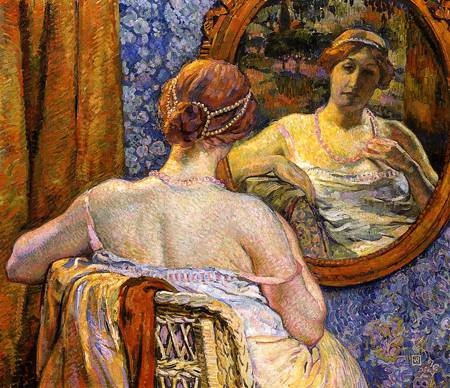


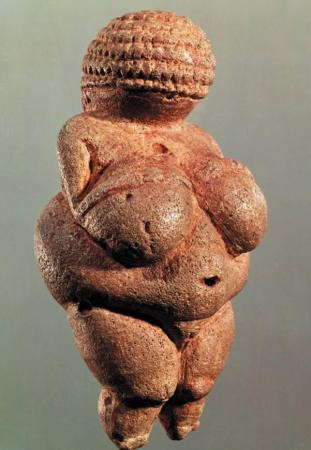 Es sencillo exagerar la importancia de los ejemplos específicos de ginocentrismo cuando en realidad dichos ejemplos pueden estar igualmente balanceados, culturalmente hablando, por actos y costumbres centrados alrededor de los hombres, o por eventos que niegan el concepto de una ubicua cultura ginocéntrica. Se nos recuerda aquí que el viejo adagio “
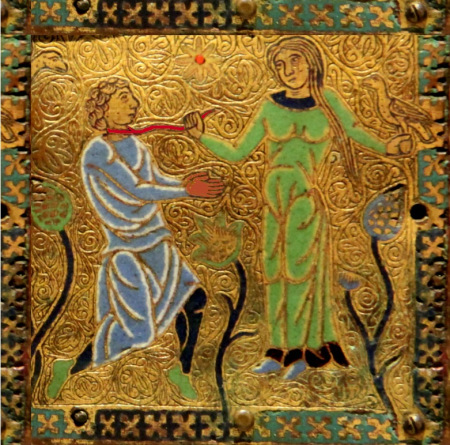 La feudalización del amor no era algo que pudiera verse en épocas anteriores al Medioevo, y mucho menos en la era Paleolítica cuando el feudalismo sencillamente no existía. Por ejemplo, no hemos visto aún pinturas en cuevas iguales a este arte de la Edad Media que muestra a un hombre actuando como servil vasallo de una mujer dominante, quien lo lleva de su cuello por un cabestro.