Lecture No. 11
“Propaganda, as inverted patriotism, draws nourishment from the sins of the enemy. If there are no sins, invent them! The aim is to make the enemy appear so great a monster that he forfeits the rights of a human being.” – Sir Ian Hamilton
The physical destruction of maleness is the logical outcome of feminist governance. The more feminist governance exists, the more anti-male persecution there will be, and the closer to Holocaust we will find ourselves. More feminism will not result in greater sexual equality. More feminism is not the solution to the problems addressed by Men’s Rights Activists. Feminism is the problem. How could it be otherwise?
Feminists believe that a debt is owed to them by all men, and they are perfectly content to recover this debt in blood and suffering. No matter how much pain they inflict unto the world, it will never be enough to satiate their violent, vindictive emotions. Rather, the more harm they inflict upon men, the more normalized this becomes, and – like a drug addiction – they will need ever greater ‘highs’ to satisfy the hate, culminating in the Final Punishment, the total eradication of men.
Note that I am not mincing words. I will not tread lightly around this subject. I will not resort to euphemism or conceal my message ‘between the lines’. I will not leave you with the mere implication that Male Holocaust is the eventual outcome of feminism, before quickly moving on to talk about other things, as though airing the idea should be an embarrassment for the speaker. I am fully aware that mine is a marginal view of feminism, and may be considered by some to be ‘extreme’, but then the widespread misunderstanding and misrepresentation of what feminism is is just another symptom of the sickness I am describing. I will state, quite openly, that this is the conclusion I have reached, having considered all the available evidence, and it is a conclusion I would encourage nobody to take lightly.
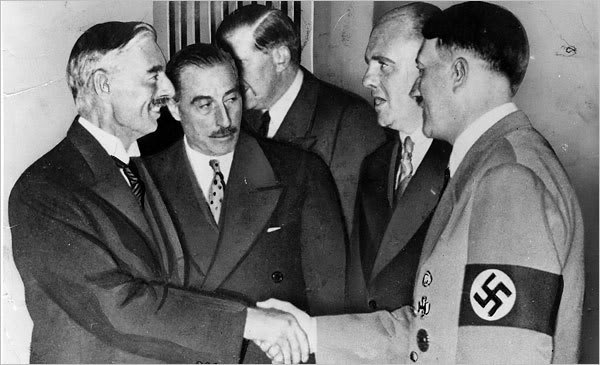
The imminent attempted eradication of half the human race calls for writing unimbued by flippancy or fancy. It does not permit me to enter into civil discussion with those who will be attempting said eradication or cheering it on from the sidelines. There is no object in a respectful exchange of views with such people; the very idea appears, to me, to be an ugly parody of truly civilized discourse – sort of like Neville Chamberlain trying to appease Adolf Hitler. No, my aim is to convince as many people as possible that this is, indeed, the truth, and thus to propel them to do whatever they can to stop a humanitarian disaster before it begins. To that end, I shall tell it like it is, and call out the enemies of humanity as I see them – and they are feminists, who are even now, as you read these words, beavering away at stamping that official seal onto their key tenet of Collective Male Guilt.
No matter how far down the rabbit hole she has gone, the feminist is cognizant, at some level, of the fact that a person must have actually committed a crime in order to be guilty of it. Initially, this fact appears before her, phantomlike, as an inconvenient truth, a sticking point, an irritant – like a lump in the throat, or a speck in the eye, that simply will not go away. This irritating truth is a logical interceptor, a pile of debris left on the tracks. She wonders: must I stop and turn around? Can my feminism, this wonderful vehicle for my catharsis, be reconciled with my assumptions of human individuality and legal impartiality? Of course it cannot, and if she remains a feminist, she abandons the latter.
Treating individuals as individuals destroys any legitimate appeal to Collective Guilt and Collective Punishment, and vice versa: subscribing to notions of Collective Guilt and Collective Punishment negates the possibility of treating individuals as individuals. Having made her choice, she ignores this truth, that individuals must individually commit acts to be held individually accountable for them. It becomes irrelevant; revenge is higher on her list of priorities. Individual responsibility has ceased to matter for her, and it must cease to matter for others also. Those who remind her of it are attacked (cue the shaming tactics), and eventually, the fact itself is attacked. Individual responsibility is the product of false consciousness; all men carry guilt. Biological essentialism, once the stock in trade of the fascist far right, is resurrected as justifier of the authoritarian New Left.
Feminists are uninterested by truth. They do not formulate their principles based upon analysis of collected truths. The starting point for all feminism is misandric emotion, and subsequent principles are formulated upon this. Truth is largely incidental. It is greatly appreciated when it appears to coincide with feminist arguments, and outright attacked when it does not; otherwise, it is irrelevant. Facts are a tool of the patriarchy; feminism aims to elevate subjective passions and wills to the lofty quarters previously reserved for what can be objectively verified.
Detractors remain, of course, pointing out the awkward, inconvenient, irrefutable truths. For instance: even if we accept the fallacious claim that one in four women gets raped, that would imply that, at most, one in four men commit rape, assuming that each rapist commits only one rape. But this is not very realistic, since we know that there are serial rapists, whose recidivism would drive the number of guilty parties down significantly. Could anybody who touts the ‘one in four’ figure realistically disagree with this assessment? Such people are forced to conclude, with us, that at least three quarters of men have never and will never rape anybody; in other words, they are demonstrably not rapists. Is it not monstrous, then, to tar one hundred percent of a demographic with the crimes of less than a quarter? Perhaps we should hold rallies, in the style of Take Back The Night and so on, in which we chant “three-in-four! Three-in-four!” until people get the message that the overwhelming majority of men are not rapists and do not deserve to be labelled as such. What do you think?
Whatever the case, Collective Guilt appears to be ruled out – but we underestimate feminist creativity. While some of feminism’s more demented followers have asserted that “all sex is rape” – making nearly all men into rapists for having engaged in consensual sex at some point, including that initiated by women – most of the ‘third wave’ has gravitated to a phony rationalization that a ‘rape culture’ persists among men en masse. Rape culture doctrine holds that, although a minority of men in fact commit the act of rape, the other seventy-five percent (or, if we are being realistic, a significantly higher percentage) are cheering them on from the sidelines, deriving pleasure vicariously from the knowledge that women are being sexually attacked. Collective Guilt is secured.
The truth – that men are more histrionic than women when it comes to rape claims – is immaterial and can be safely denied or ignored. Further examples of feminist creativity – finding innovative ways to blame all men for the crimes of a small number – can be found for every subject that they write about. I will not list them here because our discussion must move on. It will suffice to say that all such creativity resolves to the myth of ‘the patriarchy’ – that individual men who do not control or abuse women nevertheless, somehow, simply because they are men, actively support the processes through which other men do control women. The only thing that a man must do to be guilty of this is to be male; ergo, by existing, he is guilty. All feminist male-blaming creativity is a variation on this bio-essentialist theme, and all of it serves to legitimize Collective Guilt and Collective Punishment.
The feminist process of destroying men and maleness will not necessarily follow a defined plan. It does not have to! To this very day, historians continue to debate whether there was ever a direct order given for the Final Solution, or if the Holocaust was the result of cumulative radicalization within the totalitarian, anti-Semetic state bureaucracy of Nazi Germany. It is at least conceivable, then, that the murder of millions can be achieved organically, after a significant period of demonization which leaves most of the population indifferent (if not hostile) towards the scapegoat. Very few people are actually needed to carry out a genocide – typically less than ten percent of a population, often less than five. Indifference is all that is required of the remainder.
Having said this, there is at least one explicit plan for Male Holocaust, which was emphatically not written as a satire, even if its author later brushed off troubling questions with this claim. While the SCUM Manifesto is remembered today as a bizarre relic which in no way represented mainstream feminism at any time, it’s worth pointing out that the text only achieved ‘classic’ status because of its overwhelming popularity. Even if we were to contort ourselves into believing that Valerie Solanas intended the text as a joke, we cannot believe the same about her followers. Of these, perhaps the most famous would be Robin Morgan, who included excerpts from SCUM in her anthology Sisterhood is Powerful, and stated her sincere aim that the “Feminist Revolution” would achieve not “some false state of equality,” but “a proud gynocratic world.”
Still, SCUM hardly contains the blueprints for male extermination. The feminist project has not followed SCUM to the letter, though this is perhaps because there is no letter to follow. The text is more statement than program; it is the violent, vindictive emotionalism laid bare, the ugly face of feminism unmasked, the dissected contents of a dirty bomb formerly disguised as a birthday present. In the long run, the publication of SCUM has probably benefited anti-feminists most of all. It is proof positive that feminism is, at least in part, supportive of female supremacy and the elimination of men; and that such views, when initially aired, were received with enough support from the feminist sector to make the book famous. Would feminists today be so dismissive of SCUM if anti-feminists had not seized on it as evidence?
To get back on track: while there certainly are individuals working within state bureaucracies whose chief aim in life is to make men suffer – and indeed, government departments have been set up for this very purpose – an official order to eliminate men has not (yet) been given, as far as we know. But one does not need to be given, for the situation may come about organically.
For decades, males have been subject to the worst possible demonization in mass media – including, earlier this year, the portrayal of newborn babies as inherently evil, rapists-in-waiting. The slurs made against all men, which cannot possibly be justified on the grounds of deterring that small number of men disposed to committing crimes, are typical of a dehumanization campaign.
The aims of this long hate crusade are threefold. First, that women, being exposed to the endlessly repeating feminist hate loop, will adopt the view that men are violent, inhumane oppressors, and are therefore deserving of whatever evil they suffer. Although most women will initially oppose this message, the endlessly repeating hate loop, because it is so persistent and pervasive, eventually breaks down psychological resistance. Once the hate loop had gathered enough momentum to carry itself, and was becoming bigger all the time, like a snowball rolling down a hill, then our cultural guardians needed only to intervene occasionally in order to fine-tune its content. E.g. it was not enough for a woman to only fear ‘strange men’; it had to be transmitted to her that her own husband, her father, her son, etc., are activated cells in ‘the patriarchy’ which is oppressing her, that they are each a ‘potential rapist,’ and so on.
The second aim of the dehumanization campaign is to get men to turn on each other. That this forms part of feminist methodology is not surprising, since exploitation of masculinity and male physical muscle, to be used against other men for the benefit of women, is the central plank of historical Gynocentrism. In addition to appealing to powerful men to pass punitive legislation enabling the brutalization of their less powerful brethren, feminists drive wedges between common men. By promoting to men the message that their own sex is full of rapists, abusers and pedophiles, men will be less inclined to identify with other men, or with men in general, and will feel much less in the way of mutual support or sympathy.
Even as the sexual grievance industry indefinitely expands the meanings of emotive words like ‘rape,’ ‘violence’ and ‘pedophilia,’ any man accused (not even charged, let alone convicted) of any of these acts becomes a persona non grata among his own sex. Even worse, the falsely accused man (or the man ‘guilty’ under the new definitions of these terms) finds himself on the receiving end of vigilante justice by outraged men who have swallowed the feminist line that male abusers are rampant everywhere (therefore this accused man must be guilty). When the falsely accused and the newly criminalized are being loaded onto train cars for deportation to death camps, men who have not yet been accused will turn their heads, consoling themselves with the thought that those men must be abusers, and so they are deserving of whatever happens to them. The men who have not yet been accused are lulled into a false sense of security, believing that they will be safe, so long as they continue to obey the feminist state.
The third aim of the dehumanization campaign is to normalize brutality against men. Feminists are boiling a frog, as the proverb goes. The cumulative brutalization of men occurs in increments, each of which appears to be objectionable, but not appallingly so (except, perhaps, to those who are paying close enough attention to perceive the creeping despotism). Already, we have surpassed situations which would have caused men to pour onto the streets in revolt had they been achieved in one fell swoop – the enslavement of men by family courts and child support laws, rape trials held in secret and without a jury in Sweden, the negation of the presumption of innocence for men in several states, mandatory arrest laws for men who call the police because their girlfriends have stuck knives in their chests, men being incarcerated and sold into sexual slavery in debtor’s prisons because their wives were bored, and so on.

As the brutalization of men becomes the norm, practised by more people, a greater number of misandrists will become emboldened to act out their hate. Feminism does not entail men ‘losing privileges,’ or suffering for a little while until the sexes are in balance and life becomes a perfect harmony. The more feminism, the worse things will be for men, right up to the point of extermination. The level of persecution corresponds precisely to the level of feminist governance. When a great mass of feminist bureaucrats set to work, finding innovative ways to persecute men, the individual feminist bureaucrat realizes that there is no limit to what she can get away with.
I would like to talk a little more about exactly why this is. From its earliest days, feminism was envisioned as a cultural war. Making misandric persecution a reality meant that the dehumanization and brutalization of men had to become normalized phenomena – background noise, those aspects of existence nobody bats an eyelid at, those facts of life that adults resign themselves to, the unpleasantness of which can be explained away by defeatist mantras like “it’s just the way things are,” “it sucks but what can we do about it,” and “men and women are different, so just man up and take it.” Creating this kind of hostile indifference towards Men’s Rights was necessary because it is the foundation upon which active persecution stands. Saying that hostile indifference has become normalized is another way of saying that it is normal for people to practise hostile indifference. In other words, enough people practise hostile indifference for it to be considered normal. That is, a great number of people practise hostile indifference, and are not taken to task for it, because it is sufficiently widespread to rule out the possibility of individuals being taken to task for it.
What we have, then, is hostile indifference towards men as a characteristic of the social organism as a whole, and it is within state bureaucracies that feminists congregate to build active persecution upon this normalized hostile indifference. The hostility and indifference towards men allows them to get away with this, because it affords each misandric individual anonymity and irresponsibility. She did not create this situation; she is not personally responsible for it. She is not the only one pushing for active persecution; everyone else is (at least) indifferent in this regard, and anyway, there are plenty of others working in the same field. Being pre-emptively ‘let off the hook’ through anonymity and irresponsibility, the individual feminist forms part of a collective mob whose members can indulge in a sentiment of invincible power, allowing them to yield to emotions which would otherwise have been restrained. Purely numerical considerations – strength in numbers – enable the individual operator to evade all questions of guilt and culpability. They become mere cogs whose existence and purpose is nonsensical when abstracted from the greater machine. They simply do as they are told, they simply ‘go along with’ what everyone else is doing – ostensibly harmless, unremarkable, dutiful.
Where a state seeks to achieve some ideological goal, its bureaucracy becomes the archetypal model of human consciousness overwhelmed by crowd psychology. Every collective acts collectively, that is, without pausing to allow the individuals to reflect, without consulting the individuals, without requiring that they give their enthusiastic assent. The collective acts with immediacy, according to its will, leaving absolutely no room for criticism from individuals within or without. Individuals within the collective act as all the others do. They are, by definition, anonymous and unaccountable. Excited by an idea, and indulging in the power of numbers, a collective does not allow or admit that anything could prevent the fulfilment of its will.
The feminist mob acts in the same way that all ideology-based collectives do – by magnifying the miniscule transgressions made against the collective, and trivializing atrocities perpetrated against others. An almost perfect example of this comes from the feminist website Sociological Images. First, the magnification of the miniscule. In September 2010, one of the site’s authors announced her outrage that a line of rulers (i.e. measuring sticks) commemorating great scientists in history included Marie Curie under the heading “Great Women Rulers of Science.” A horrific injustice, this is not. Still, at this point, we might simply assume that those habituating the blog are fragile people, finding themselves easily offended by much in life – we might think that they would feel the same way if they stumbled upon some equivalent version of these rulers with the sexes reversed.
We might think this is the case, until we scroll down to the comment section and find an accusation that Paul Elam’s A Voice for Men site is nothing but a load of “whining.” Now, in the two weeks prior to that comment being made, A Voice for Men had discussed the following:
A police state that arrests and incarcerates male victims of domestic violence and enables female perpetrators to continue criminal behavior; a ten to one death gap concerning capital punishment that works against men; a five to one death gap against men related to suicide; the staggering attrition of males in higher education and employment; the utter lack of reproductive rights for men, and the incidence of false rape allegations against men which even the police are calling epidemic.
At first glance, the cognitive dissonance is astounding. Could the feminist really have dismissed discussion of such human interest issues as these, while her own counter-movement has nothing more offensive to talk about but the headings on rulers (which actually highlight, not obscure, the fact that there have been great female scientists)?
As Paul succinctly puts it, “women’s whining = pursuit of justice. Men’s pursuit of justice = whining.” In following this simple maxim, feminists adhere perfectly to the dark elements of crowd psychology: magnifying the miniscule when it concerns them, and trivializing atrocities when these are committed against others.
Like all other collectives governed by the principles of crowd psychology, feminists have a tendency towards the power of suggestion: that an idea only needs to be spoken aloud for it to be taken as the gospel truth. Of course, this only works with certain types of ideas – most obviously, those which aid in magnifying the miniscule, but certainly not the ones that draw attention to the non-trivial atrocities suffered by others. It matters not that the cries of rape advocates – “one in four!” – are based on a study, the methodology of which is so flawed that any serious researcher would have transferred it directly from the printer and into the big round file. Young women will continue to pour onto the streets chanting it – “one in four! One in four!” – why? Because it serves the crowd to have been transgressed against in such a way, because it provides them with those feelings of righteous indignation which serve as a springboard from which they may launch the active persecution of the targeted class. No individual need bother checking the facts, and the crowd would not pay any attention to one who did anyway. As an example of this power of suggestion in action within a feminist state bureaucracy, we need look no further than the United Kingdom’s former Minister for Women and Equality, Harriet Harman, who was eventually ordered by a judge to stop spinning the lie that rape has only a six percent conviction rate. Even then, rape advocacy groups like Women Against Rape have continued to refer to this completely invented figure. Evidencing one’s claims is a trifling matter, and one subordinated to the necessity of exciting the mob.
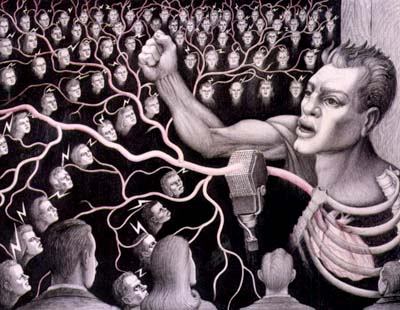
The power of suggestion is particularly pronounced in the feminist crowd because it is mostly composed of women, and women are more impressionable than men. This is not an inherent difference between the sexes, but a socialized defect. A lifetime of privilege, of parasitic exploitation and entitlement, of juicing the fruits of another’s labor, has left many women devoid of character, with unrealistic views of the world which leave them open to certain kinds of manipulation that men are not so easily taken in by. Feminism is ideological snake oil, and impressionable women are its customers. If an idea excites them, if that one-in-four statistic sends a shiver down their spines, if it causes them to feel something so strongly, then there must be at least an element of truth to it – so the unconscious mental processes go. How could something that is not real affect her in a way that feels so real? Impossible, one would think. Once feminists understood and appreciated the malleability of women, they had merely to present astounding statistics which, when recited endlessly, to the point that they become background noise, exist on some plane beyond truth and falsehood, the plane of popular consensus, and so cannot be refuted by the evidence that most men would have asked for upon originally hearing the claims.
For the same reason, we find the tendencies among feminists to simplify, and to go immediately to extremes. An exceptional instance of violence against women becomes, for feminists, the rule which is practised against all women, everywhere. A college student making a rape joke to his fraternity brothers becomes a microcosm of society as a whole. On that note, making a rape joke is the same thing, for feminists, as condoning the actual rape of human beings. There is no room for nuance, no accounting for the thousand shades of grey that exist between black and white; only the two colors perceived by monochrome Manichean Essentialists. A rape joke could conceivably and consistently be made by people spanning the entire spectrum of opinion on rape, in the same way that people can make jokes about dead babies, tasteless though they may be, without necessarily supporting or contributing towards infanticide. This is common sense stuff, but common sense stuff does not excite the passions of ideological mobs. Collectives such as feminism rely, for their shared understanding, on a fundamental lack of nuance – to infallibly appeal to all its adherents, an ideological collective must propagate a small number of simplistic, exciting, image-like ideas. In the case of feminism, which is an ideological collective based upon the validation of violent and vindictive feelings held towards men, we should not be surprised to find that these image-like ideas are so often characterized by violence.
Feminism’s validation of immature, simplistic, exaggerated, generalized and extreme ideas results in violent emotion as a guiding principle of justice – in other words, the Collective Guilt and Collective Punishment I have already discussed. Feminist jurisprudence flows directly from the violent and anti-male emotions of individual feminist operators, emotions which are, in turn, validated by the ideological collective which has successfully constructed a climate of hostile indifference towards men. There is not even the pretense of impartiality in feminist jurisprudence – it is openly ‘anti-normative,’ seeking favorable conditions for female criminals while indefinitely expanding the scope of punishable male deviancy. Those who advocate and practise it are open about their vindictive sexism, and their reforms continue, under the radar. We are heading towards explicit male persecution because there is nowhere else this can go and very few people willing or informed enough to stand up and say ‘no’.
For those who would deny that feminism condones and advocates violence against men, I need only direct you to their own creations. Here is the banner for feminist website Feministe:
Now, despite the relatively tame content of this particular site, does it seem conceivable that the out-of-frame target of this little girl’s firearm is not a grown man? It’s a clever trick, because the target is not shown, allowing for plausible deniability on the part of the site’s members. After all, feminists don’t shoot people, do they? As Fidelbogen puts it:
Try looking at the little girl in context with the word FEMINISTE directly behind her. Note the synergy of the two elements, how they combine into a visual-conceptual unity of message – effectively amplifying and reinforcing each other.
Moving on, we might consider the hilarious irony of feminists voicing concerns over the likelihood of Pick-Up Artist Roosh Vorek being violent while simultaneously making violent threats against him:
I must find out his real name so if I ever meet him I can suckerpunch him in the dick.
I think Roosh is a great example of what truly needs to be purged.
I’m wondering if his blog is violent enough to notify the DA’s office.
I’m wondering too. But what I’m wondering about is why the phrase ‘cognitive dissonance’ gets thrown around by anti-feminists in situations like these, since the feminists’ behavior is perfectly consistent. It is simply that they have magnified all miniscule transgressions against women – such as, a vaguely insulting comment from a Pick-Up Artist – and have trivialized all atrocities against men. When it is appreciated that feminist operations are all characterized by double standards in their dealings with men and women, it will be understood that there is no ‘dissonance’ here at all, cognitive or otherwise – their behavior is fully consistent with their twin assumptions that every inconvenience a woman faces is a humanitarian tragedy, and that men do not matter at all.
Thus, after decades of feminist teeth-gnashing about the horrors of domestic violence, and how it is a subject so serious it should never be joked about or taken lightly, feminist website Jezebel produced a now-infamous article gloating over the greater incidence of domestic violence perpetrated by women, and issuing direct threats to men generally that the website’s authors will act abusively towards them should men “fuck with” them. Now that men are the victims, it’s acceptable to post amusing pictures of battered men; to refer to female-perpetrated abuse as “busting open a can of whupass”; to refer to male victims as “the dudes” and to employ veiled shaming tactics implying it is their own fault for not fighting back. If you follow the link, please check out the comments – make sure you click on ‘All’ and scroll down to get a proper impression of what feminists are really like when they think they are safely out of the world’s gaze.
The image-like ideas that feminism employs are not connected by logical bonds, although they are all consistent at base because they all contribute towards increasing the power of women. To the uninitiated, it appears that the various antics of feminist activists are not at all connected, and that the most contradictory, dissimilar ideas are supported side by side. E.g., feminists simultaneously advocate for the censorship of softcore pornography targeted at men and lament that there does not exist more explicit pornography featuring naked and aroused men for the consumption of females. This only leads to sputtering accusations of ‘cognitive dissonance’ if one takes for granted that feminists assume their own philosophy is universalizable. If they did assume this – if their goal truly was sexual equality and impartiality – then it would indeed be true that feminists would be irrational and could fairly be said to suffer from cognitive dissonance. But this is not the case. Their philosophy is not intended to be universalizable. The aim is not to apply a uniform standard towards men and women; it is to level women up and level men down. It is to grant women more rights, indefinitely, and to force new obligations onto men, indefinitely. Double standards are the feminist rule, not the exception.
And what is the logical outcome – say, if tomorrow, feminists got everything they are advocating for today? We would be plunged immediately into a two-tier system of rights and obligations, where men and women form distinct castes of citizen, the former weighed down by the obligations that enable the latter to luxuriate in their total autonomy. Life for women would be a literal lawlessness, while men’s every move would be dictated from above, geared to the purpose of providing for all female needs and wants. It would not be inappropriate to call such a system sexual feudalism, and every time I read a feminist article, this is the impression that I get: that they aim to construct a new aristocracy, comprised only of women, while men stand at the gate, till in the fields, fight in their armies, and grovel at their feet for starvation wages. All feminist innovation and legislation creates new rights for women and new duties for men; thus it tends towards the creation of a male underclass, the accomplishment of which will be the first step towards the extermination of men.
At present, feminism displays all the hallmarks of a dangerous movement about to become fascistic: its adherents demand blind submission to dogma, they are unable to discuss its principles, they desire to spread its ideology (by whatever means necessary), they are intolerant of those who do not embrace it, they immediately rush to generalization, they demand authenticity and conformity to a rigorous standard of morality, and they utilize bio-essentialist rhetoric and violent imagery to denigrate their targets. The (often literal) dehumanization of men, coupled with feminist governance, could not be leading anywhere but the enforcement of Collective Punishment, the idealized end point of a principle of justice based upon the validation of violent, primal emotion. Not one iota of sympathy, of fellow human-feeling, is to be felt for innocent men subject to the worst atrocities.
Holocaust is the ultimate utopian vision of some radical feminists, and they are perfectly open about this, discussing the male-free world of the future as insipidly as if they were discussing holiday plans. Other radical feminists imagine a future in which men’s numbers are greatly reduced and the remaining males are kept as slaves. Still others dream of a society similar to ours, but with women in the lead in all spheres of life, with all pretense to equality abandoned. Earnest feminists, meanwhile, do not necessarily intend any of these outcomes, but as they are members of the collective, they will act as members of the collective, and even if they do not participate in the active persecution of men, they will be forbidden – as an unspoken rule – from exhibiting any sympathy at all for men, no matter what they suffer. Those who do are promptly expelled, labelled anti-feminists, and subject to vicious attacks by the in-group. No feminist will stop the process of male elimination, nor will she feel any regret once it is complete, as long as she remains a feminist.
The destruction of males does not require a majority of feminists to even be on board; it is an organic process which unfolds naturally in time, and once a certain point is passed, there will be no stopping the attempt. Women like Hannah Rosin, who desire not equality but female supremacy with men as a permanent underclass, will find that the psychic forces which led them to agitate for this do not simply disappear once sexual feudalism is achieved. Feminism is a movement based upon the gratification of those psychic forces, the permanent, hateful needs of misandric women, and no limits will be reached for as long as men can be made to suffer even more.
Utopian visions supposedly present the perfectly just and moral society, but really, they envision the end of morality altogether. Utopia is that in which nobody makes an immoral decision; thus, nobody really makes moral choices. Rather, they have been socialized so well – through intimidation or brainwashing – that they always make the same choices. This silly little fantasy has inspired tyrants to send millions to their deaths. Early modernity is marked by the two most prominent examples of this: the French and Russian revolutions. Both were fought on the premise that the old regime would give way to a new age of human perfection. Both ended in failure, but not before soaking their countries in blood. The historian Hippolyte Taine wrote that it was by invoking “liberty, equality, fraternity” that the architects of the French Revolution were able “to install a despotism worthy of Dahomey, a tribunal similar to that of the Inquisition, and to accomplish human hecatombs akin to those of ancient Mexico.” Similarly, Communism was presumed to be the realization of freedom and all human potential – until it was actually realized. Communist countries repressed and starved their populations, worked them to the point of exhaustion, banned free speech, purged dissidents, and invaded other countries with a zeal for imperial conquest that must have seemed rather surprising to those who saw communism as an ideology of peace. And all this, not for any existing object – not for land, or resources, or for freedom – but for a social order that had never existed and was merely imagined.
We should not expect Feminist countries – capital F, standing for explicit Feminist Governance – to be any different. Feminist countries will starve and repress, they will force men and dissenting women into labor camps, they will ban open discussion, commit murder on a grand scale, and they will invade other countries, all in the name of liberating women. If there is anything we can learn from the last few hundred years, it is that humanity repeatedly fails to learn the important lessons. After men, which group shall be persecuted? Must we all take a turn, as though our biological characteristics make us representatives of those who appear similar to us, across all time and space? After the horrors of the Soviet regime and the Holocaust, is it not sensible that we all agree to cease judging heterogeneous groups of people by bio-essentialist standards, and damning them all to hell on earth because of the apparent crimes of a minority (be this in reference to the Elders of Zion or to ‘the patriarchy’)?
Now, I am well aware, that simply asking these questions is not going to change anything. It is certainly not going to change any feminist minds. But I am not here to plead with feminists. I am here to interrogate them, to embarass them about their future plans, and to spread the word about what those plans are. Because even the self-proclaimed enlightened, progressive feminist movement has not learned the lesson that humanity should now be well-versed in.
In contradistinction to them, I say – peace be with you.
Adam
Further Reading:
John Dias. A Glimpse of Collective Hysteria, 80 Years into the Past
Welmer. The Symbiotic Relationship Between Misandry and Power
Fidelbogen. A Nice Respectable Word
GYNOCENTRISM THEORY LECTURE SERIES:
1. Staring Out From the Abyss
2. The Same Old Gynocentric Story
3. Refuting the Appeal to Dictionary
4. Pig Latin
5. Anatomy of a Victim Ideology
6. Old Wine, New Bottles
7. The Personal, as Contrasted to the Political
8. Chasing Rainbows
9. False Consciousness & Kafka-Trapping
10. The Eventual Outcome of Feminism, Part I
11. The Eventual Outcome of Feminism, Part II
12. How to Break a Dialectic